Hypochlorous Acid (HOCl): Science, Evidence and Dermatology Uses
Hypochlorous acid is everywhere in skincare. Here is what the dermatology evidence actually supports, where it is weak, and who should bother.
Hypochlorous acid is not hype with no substance behind it. It is a genuine antimicrobial that hospitals have used on wounds for years, and your own immune system makes it to fight infection. That part is solid. What happened recently is that it jumped from the wound-care shelf to the beauty shelf, and the marketing for some of those new uses ran ahead of the proof. This page keeps the two apart: where the research is strong, where it is promising, and where a real benefit is being stretched into a claim it cannot support.
So you know what you are reading: the strongest clinical data is for medical-grade HOCl on wounds and for sodium hypochlorite baths in eczema. Some of the skincare studies are small, and a few are funded by companies that sell the product. We flag which is which as we go, because for an ingredient this hyped, knowing the quality of the evidence is the whole game.

On this page
- Quick answer: what is HOCl?
- Why is everyone talking about it?
- How HOCl works in your immune system
- HOCl vs bleach
- What the research actually shows
- HOCl for acne
- Sensitive skin, eczema and rosacea
- Can HOCl help skin heal faster?
- What HOCl cannot do
- Who benefits, who does not
- How to use HOCl correctly
- Why it fits hot, humid conditions
- What to use it with
- How to choose a product
- Questions people ask most
- The bottom line
- Sources
Quick answer: what is hypochlorous acid?
Hypochlorous acid (HOCl) is a mild antimicrobial molecule that your own immune cells produce to kill bacteria, viruses and fungi. In skincare it is sold as a mildly acidic (around pH 4 to 5), fragrance-free spray, usually at very low concentration. The evidence is strongest for cleaning and protecting wounds and reducing skin bacteria. For acne and eczema it is promising but thinner, and most "anti-aging" claims are not supported.
Why is everyone suddenly talking about HOCl?
Three things happened at once.
Short-video platforms turned it into a category. A clear, odorless mist that you can spray over a sweaty face reads well on camera, and the "your body already makes this" line is an easy hook. Post-workout skincare became its own segment, and HOCl slots neatly into the gap between leaving the gym and getting home to wash properly. And dermatologists who had used HOCl for years in wound care and post-procedure recovery started mentioning it publicly, which gave the trend a layer of professional cover.
None of that is evidence that it works on your skin concern. Popularity and proof are different things, and this article keeps them apart on purpose.
How HOCl works inside your immune system
This is the part that is genuinely well established, because it is basic immunology rather than a marketing claim.
When a white blood cell called a neutrophil swallows a microbe, it traps it inside a compartment and floods it with oxidants. An enzyme called myeloperoxidase combines hydrogen peroxide with chloride ions to produce hypochlorous acid on the spot. HOCl is one of the most powerful germ-killing oxidants the body makes. It destroys microbes by oxidizing their proteins, fats and DNA, then reacts away quickly into much less reactive, mostly chloride-containing leftovers rather than lingering on the skin.
 Tap to enlarge
There is a second, more interesting mechanism that explains the skin interest beyond simple disinfection. HOCl appears to dampen a master inflammation switch called NF-kB. In mouse models and in human skin cells, topical hypochlorite reduced NF-kB-driven inflammatory signaling, which is why researchers think it may calm redness and itch rather than only killing bacteria. That mechanism is real. How much of it translates to a spray bottle on intact human skin is where the evidence gets thinner, and we will be clear about that.
One honest footnote: the same oxidative power that kills microbes can damage tissue when it runs unchecked. That is why HOCl in the body is tightly localized and short-lived, and it is part of why concentration matters so much in a product.
There is a newer wrinkle worth noting: HOCl appears to knock down problem bacteria without flattening the skin's overall microbial diversity, at least in the eye-area and wound studies done so far, where harmful species dropped while diversity held or improved (reduction in bacterial load on ocular skin, Clinical Ophthalmology, 2017). That is part of why it reads as "cleansing" rather than "scorched-earth" on skin.
This is not a new idea, either: a dilute chlorine wound rinse known as Dakin's solution, whose active component is hypochlorous acid, has been used to clean wounds since World War I (Dakin's Solution, StatPearls / NCBI).
HOCl vs bleach: the most common misunderstanding
This is the question that drives the most clicks and the most confusion, so it is worth getting exactly right.
HOCl and household bleach are chemically related. They live on the same chlorine chemistry. The difference comes down to two variables: which molecule is present, and how much of it.
When sodium hypochlorite (bleach) dissolves in water, it sits in a balance between two forms: hypochlorite ion (OCl⁻) and hypochlorous acid (HOCl). What controls the ratio is pH. The tipping point sits at a pH of about 7.5. Around pH 4 to 5, the range skincare HOCl is formulated at, the solution is almost entirely HOCl, the gentle, uncharged, highly active form. Up at bleach's natural pH of around 11 to 13, it is almost entirely the harsher hypochlorite ion, and the amount of true HOCl drops close to zero.
 Tap to enlarge
Two practical consequences follow.
Concentration. Household bleach is roughly 5 to 8 percent sodium hypochlorite. That is somewhere around 50,000 to 80,000 parts per million. A skincare HOCl mist is usually 50 to 200 ppm. So a skin product is on the order of several hundred times more dilute, and it is held at a mildly acidic, skin-friendly pH of around 4 to 5 in the milder molecular form.
Potency per molecule. HOCl is roughly 80 to 100 times more germicidal than the hypochlorite ion, so you need far less of it to do the antimicrobial job. That is the whole point of formulating at low pH: you get the active form, so you can run it gentle and dilute.
That is why one is a stinging, fabric-bleaching industrial chemical and the other is a near-isotonic mist that does not stain and rarely irritates.
One myth worth killing while we are here. "It is natural, your body makes it" is true, but it is not what makes it safe. Safety comes from the low concentration, the mildly acidic skin-friendly pH and the fact that very little is absorbed. Plenty of things your body makes would hurt you at the wrong dose. Judge a product by its numbers, not by the word natural.
What does the research actually show?
This is the centerpiece. Below is an honest reading of the evidence, sorted by how strong it is. Read the verdict column carefully, because "supported," "promising" and "not proven" are doing real work here.
 Tap to enlarge
| Use or claim | What it is based on | Evidence strength | Honest verdict |
|---|---|---|---|
| Killing bacteria and reducing skin microbial load | Decades of microbiology, broad-spectrum data, FDA-cleared wound products | Strong | Supported |
| Wound cleansing, biofilm disruption, post-procedure infection control | Multiple RCTs in diabetic foot ulcers and post-surgical wounds; promotes re-epithelialization with low cell toxicity | Strong | Supported |
| Speeding visible wound and procedure recovery | Same wound literature, partly via infection control | Mod-strong | Supported |
| Calming inflammation, redness and itch | NF-kB mechanism (mouse and human skin cells), plus clinical reports | Moderate | Promising |
| Mild-to-moderate inflammatory acne | A few small RCTs plus manufacturer pilot studies | Lim-mod | Promising (adjunct) |
| Atopic dermatitis (eczema) | Bleach-bath and body-wash trials using sodium hypochlorite, not branded mist | Mod (contested) | Promising for baths |
| Hypertrophic and keloid scar prevention | Post-procedure HOCl gel studies | Moderate | Promising |
| Seborrheic dermatitis and pruritus | Small studies and review mentions | Limited | Emerging |
| Rosacea | Mostly mechanism plus small or anecdotal reports | Limited | Emerging |
| Anti-aging and wrinkle reduction | No human efficacy data | Weak | Not proven |
| Collagen boosting | Mechanistic speculation only | Weak | Not proven |
| Replacing sunscreen / acne medication, unclogging pores | No basis | None | Not a real claim |
Two cross-cutting cautions that apply to almost every row above.
First, much of the positive clinical evidence comes from small studies, and several of the acne and post-procedure studies were sponsored by companies that sell HOCl. That does not make the findings wrong. It does mean they need independent replication before "promising" becomes "proven," and a careful reader should weight them accordingly.
Second, "HOCl" is not one product. There is the medical wound-care fluid (a regulated device, often higher concentration, used under supervision), the sodium hypochlorite bleach bath (whole-body immersion, used in eczema), and the cosmetic facial mist (low concentration, sold over the counter). Evidence for one does not automatically transfer to another. Keep that in mind every time a brand cites a wound-healing study to sell you a face spray.
One regulatory point worth getting right, because brands blur it. Topical HOCl products are cleared by the FDA as medical devices through the 510(k) pathway, they are not "FDA-approved drugs," which is a higher bar involving a different process. In 2018 the FDA broadened the indications for these products to include relief of itch, eyelid cleansing, and wound cleansing (antimicrobial efficacy and in vivo use of HOCl, PMC, 2023). So "FDA-cleared" is accurate; "FDA-approved to treat acne" or similar is not.
HOCl for acne: helpful or overhyped?
Acne forms when pores clog with oil and dead skin, the bacterium Cutibacterium acnes overgrows, and the surrounding tissue inflames. An antimicrobial with anti-inflammatory properties is a reasonable thing to point at that problem, which is why the idea is plausible. Plausible is the right word, though, not proven.
 Tap to enlarge
Where HOCl can help. As an adjunct on mild-to-moderate inflammatory acne (the red, angry papules and pustules rather than blackheads), small trials show it can reduce lesion counts versus placebo, and it is well tolerated. To put a number on it: in manufacturer-sponsored studies, HOCl preparations cut inflammatory lesions by roughly 64 to 66 percent and non-inflammatory lesions by about 43 percent over the study period. Treat those figures as encouraging rather than definitive, because the company selling the product ran the studies. It may suit people whose skin cannot handle the dryness and irritation of stronger actives, and it works as a gentle add-on rather than a replacement.
Where it does not help. It does not exfoliate, so it does little for comedonal acne (blackheads and whiteheads driven by clogged pores). It is not going to clear moderate-to-severe or hormonal acne on its own. And it is not a substitute for proven treatments when those are warranted.
 Tap to enlarge
Versus the standards. Benzoyl peroxide and salicylic acid have far larger, longer and more independent evidence bases. Benzoyl peroxide kills C. acnes and reduces inflammatory lesions strongly. Salicylic acid gets into the pore and addresses the clogging that HOCl cannot touch. HOCl's pitch is gentleness and a calming, antimicrobial layer, not superior clearance. Treat it as a complement to a real routine, not the engine of one.
- Study type: a small number of double-blind placebo-controlled RCTs, plus manufacturer pilot studies.
- Largest evidence base: roughly 127 patients across industry-sponsored studies, plus one independent placebo-controlled trial of a superoxidized solution in mild-to-moderate inflammatory acne.
- Key finding: statistically significant reduction in inflammatory lesions versus placebo. Manufacturer studies report roughly 64 to 66 percent fewer inflammatory lesions and about 43 percent fewer non-inflammatory lesions.
- Quality rating: Limited to moderate. Small samples, several industry-funded, short durations. Promising, not settled.
HOCl for sensitive skin, eczema and rosacea
This section needs the most care, because it is where the gap between the headline and the evidence is widest.
Eczema (atopic dermatitis). The logic is sound. Eczema-prone skin is often colonized by Staphylococcus aureus, and flares track with that bacterial load, so an antimicrobial that can also calm inflammation is an appealing idea. The clinical evidence, though, is mostly about dilute sodium hypochlorite bleach baths and body washes, not about a low-concentration facial mist.
And even that bath evidence is genuinely mixed. One systematic review and meta-analysis of around 307 patients found moderate-quality evidence that bleach baths reduce eczema severity by about a fifth, roughly a 22 percent relative improvement in clinician-rated scores (an EASI drop of about 6 points from a starting score near 28). But other analyses found that bleach baths were no better than plain water baths, and laboratory work showed the bath concentrations are too low to actually kill S. aureus on skin, which means any benefit probably comes from the anti-inflammatory mechanism rather than from disinfection. So the honest position is: bleach baths may help moderate-to-severe eczema as an add-on, the mechanism is contested, and you cannot assume a face mist delivers the same thing.
Rosacea. Mostly mechanism and small or anecdotal reports. HOCl's anti-inflammatory action could in theory help the redness and inflammatory bumps of rosacea, and some practitioners use it as a gentle adjunct, but the controlled evidence is limited. File it under emerging.
Barrier-damaged and post-procedure skin. This is where sensitive-skin use is on firmer ground. Because HOCl is gentle and low-irritation, it is widely used to keep compromised skin clean after procedures without the sting of harsher antiseptics. That use leans on the wound-care evidence discussed below.
The rule for this whole category: separate what is proven from what is theoretical. The mechanism is real. The face-mist clinical proof for eczema and rosacea is not there yet, and any page telling you HOCl spray "treats" these conditions is getting ahead of the data.
- Study type: randomized and controlled trials of dilute sodium hypochlorite baths and washes, plus systematic reviews and meta-analyses.
- Key findings: one meta-analysis (~307 patients) found a roughly 22 percent reduction in clinician-rated severity (about a 6-point EASI improvement from a baseline near 28); other analyses found no benefit over plain water baths, and in-vitro work disputes the antimicrobial mechanism.
- Important limit: this is bath and wash evidence in moderate-to-severe, S. aureus-colonized eczema, not facial-mist evidence.
- Quality rating: Moderate but contested. Promising as an adjunct bath therapy, unproven as a cosmetic spray.
Can HOCl help skin heal faster?
Yes, and this is the strongest part of the entire HOCl story, which is ironic given that wound care is the use it is least marketed for in beauty.
In chronic and acute wounds, HOCl solutions reduce bacterial load, break down biofilm (the protective slime that makes wound bacteria hard to clear), and lower the risk of infection, all without being meaningfully toxic to the skin cells doing the healing. Randomized trials in settings like diabetic foot ulcers and wide post-surgical wounds back this up, and reviews note that HOCl promotes re-epithelialization, the resurfacing step of healing, with low toxicity to keratinocytes and fibroblasts.
This is why HOCl is a fixture in post-procedure recovery after things like lasers, microneedling and minor surgery: it keeps the area clean and lowers infection risk while the skin rebuilds. A fair reading is that much of the "heals faster" benefit comes from preventing the infection and excess inflammation that would otherwise slow healing, rather than from some independent regenerative magic. That is still a real and useful benefit.
Two boundaries. The robust evidence is for medical-grade HOCl used on actual wounds, often at higher concentration and under guidance. And HOCl supports barrier repair by keeping the environment clean; it is not a moisturizer or a barrier-rebuilding ingredient in its own right.
A fair comparison keeps HOCl in its lane. As a pure germ-killer it is not the most powerful option: in a head-to-head study on facial skin, chlorhexidine reduced bacteria more than 0.01% HOCl, while HOCl performed about the same as povidone-iodine and isopropyl alcohol (Tran et al., Aesthetic Surgery Journal, 2020). HOCl's real advantage is that it is gentle enough for repeated use and for delicate areas like the eyes, not that it out-disinfects everything else.
- Study type: multiple randomized controlled trials and clinical reviews across wound care and post-surgical settings.
- Key findings: significant reduction in bacterial load and biofilm, lower infection rates, support for re-epithelialization with low cell toxicity.
- Quality rating: Strong for wound and post-procedure infection control. The clearest evidence HOCl has.
What HOCl cannot do
This is the section most blogs skip, and skipping it is exactly why most blogs read like advertising. Being straight here is what makes a page worth trusting.
- It does not remove wrinkles. There is no human evidence that it smooths or prevents fine lines, and the anti-aging angle is mechanism-spinning, not data.
- It does not erase acne scars or boost collagen in any demonstrated way. Scar prevention after a procedure (keeping things clean while they heal) is a different thing from reversing scars that already exist.
- It does not replace sunscreen. Nothing about its action protects you from UV. If a routine implies a mist can stand in for SPF, that is wrong and potentially harmful.
- It does not cure eczema, rosacea or any chronic condition. At best it is an adjunct that may help manage symptoms for some people, layered onto a proper plan.
- It does not unclog pores. It has no exfoliating action, so blackheads and comedonal acne are outside its reach.
- It does not replace prescribed acne medication. If you are on an effective treatment, HOCl is at most an optional, gentle extra, not a swap.
Who is most likely to benefit, and who probably is not
A product this gentle is rarely harmful, so the real question is whether it earns a slot in your routine. Here is the decision, both ways.
Worth trying it if you are:
- Acne-prone with inflammatory breakouts, looking for a gentle, non-irritating adjunct alongside your main treatment.
- A gym-goer or someone who sweats heavily and wants a quick, no-rinse way to reduce surface bacteria before you can wash properly.
- Sensitive-skinned and recovering from a cosmetic procedure, where keeping skin clean without stinging actually matters.
- Eczema-prone and using it as one part of a dermatologist-guided plan, with realistic expectations.
- Someone who finds traditional antiseptics too harsh and wants the gentlest option that still has antimicrobial backing.
Probably do not need it if you are:
- Someone with stable, healthy skin and no specific concern. It will not give you a benefit you are missing, and "preventative" anti-aging is not a real reason here.
- Already on an effective acne regimen that is working. Adding HOCl is optional, not an upgrade.
- Buying it expecting anti-aging, wrinkle, pore or collagen results. The evidence is simply not there, and you will be disappointed.
- Looking for a single product to replace a routine. It is a supporting player, not a system.
The useful mental model: HOCl is a gentle, low-risk supporting layer with a narrow set of real strengths. If one of those strengths maps to your situation, it is worth a try. If not, it is a clear bottle of mildly antimicrobial water, and that is fine, but spend accordingly.
How to use HOCl correctly
It is forgiving, so the instructions are simple. The main mistakes are layering it wrong and expecting too much.
- Morning. After cleansing, mist onto clean skin and let it dry before your other products. It does not replace any step; it sits underneath.
- Evening. Same idea after your evening cleanse, especially useful if your skin was congested or irritated during the day.
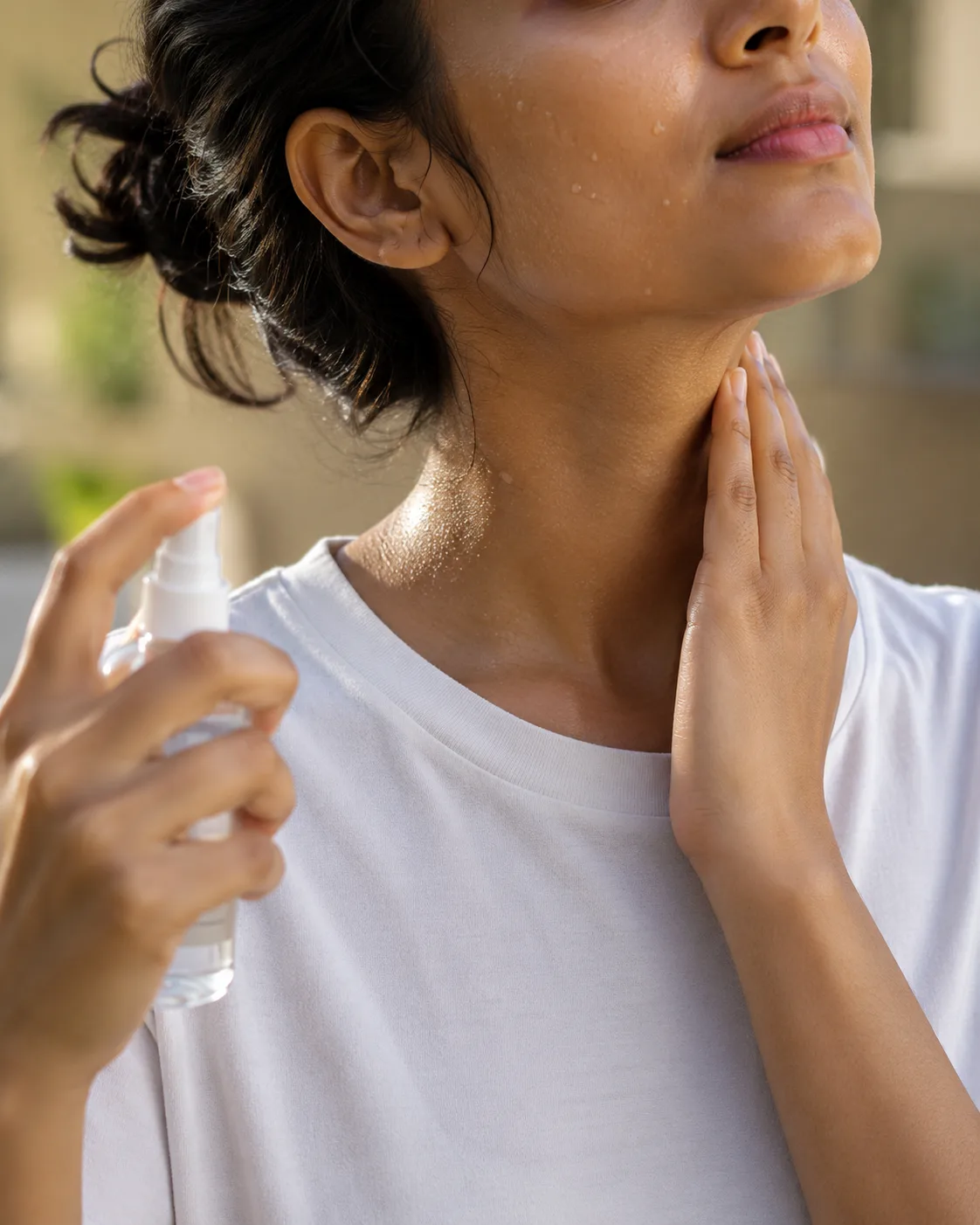
- After exercise. This is its best everyday use. Mist a freshly sweaty face when you cannot get to a proper wash, let it dry, move on. It is a holdover, not a substitute for cleansing later.
- During travel. Handy when access to washing is limited, for the same reason.
- After procedures. Use it to keep treated skin clean during recovery, following whatever your provider tells you. Their instructions override anything general.
A few practical notes. Let it dry rather than wiping it off, so it has contact time. Do not over-apply; more mist does not mean more benefit. And store it as the label says, away from heat and light, because HOCl degrades over time and a bottle that has been cooked in a hot car is doing less than you think.
Why HOCl fits hot, humid conditions
Most HOCl writing is climate-blind, written as if everyone lives in a mild, dry, air-conditioned city. If you live somewhere hot and humid, with long commutes and serious pollution, the math shifts in HOCl's favor, and it is worth spelling out why.
 Tap to enlarge
The single best-evidenced everyday use of HOCl is the same one that this kind of environment hands you constantly: clean skin that is bacteria-laden from sweat and friction, with no immediate access to a proper wash. Heat and humidity mean you sweat more and the sweat sits on the skin longer. That warm, damp surface is exactly where skin bacteria thrive, and it is the gap HOCl is built for.
Several local realities stack on top of that.
Sweat and friction together drive mechanical breakouts. Helmet straps, chin guards and the heat trapped under them produce the classic jawline and forehead "helmet acne" that two-wheeler commuters know well. Tight collars and bag straps do the same on the back and shoulders. HOCl will not fix the friction, but a quick mist on the affected area right after you take the gear off, before you can shower, targets the bacterial half of that problem at the moment it matters.
Long commutes mean hours of pollution and grime settling onto already-sweaty skin. A mist you can use at your desk on arrival is a realistic interim step when a full cleanse is not.
Monsoon humidity keeps skin damp for weeks at a stretch, which is uncomfortable for anyone prone to congestion or fungal-leaning issues on the body. HOCl is not an antifungal treatment and should not be sold as one, but as a gentle, non-irritating way to keep sweaty skin cleaner between washes, the use case is simply more frequent here than in a cool, dry climate.
Keep the framing honest. None of this is a claim that HOCl prevents acne or treats anything in humid weather. It is that HOCl's one genuinely strong everyday job, reducing surface bacteria on clean-but-sweaty skin when you cannot wash, comes up far more often in this environment. That is a real reason it earns a place in a gym bag or a commuter's desk drawer, stated without overpromising.
What ingredients can be used with HOCl?
Honest caveat up front: there is very little controlled research on layering HOCl with specific actives. Most "compatibility" advice, including this, is reasoning from chemistry and how the product is used, not from studies. Treat it as sensible guidance, not proven fact.
HOCl is typically used as a standalone mist that you let dry before the rest of your routine, which sidesteps most interaction worries. Because it is a brief, low-concentration, evaporating layer, it generally plays fine with niacinamide, retinoids, vitamin C, azelaic acid, benzoyl peroxide and salicylic acid when you apply HOCl first, let it dry, then layer the active. There is no strong reason to expect a stable cosmetic HOCl mist to wreck these on contact at the timescales involved.
The cautious framing some people raise is that HOCl is an oxidant and pure vitamin C (ascorbic acid) is an antioxidant, so in theory they could blunt each other if mixed wet. The practical fix is the same as the general rule: apply HOCl, let it dry fully, then apply the other product. Separating them in time removes the question.
The real point: HOCl is not a "mixing" ingredient. It is a mist you apply and let dry. Use it as a discrete step and the layering question mostly disappears.
How to choose an HOCl product
Because the quality range is wide and the chemistry is unforgiving, the label tells you a lot if you know what to read. Here is an evidence-based checklist.
- Concentration. Look for a stated ppm. Skincare formulas typically land around 50 to 200 ppm. A product that hides its concentration is hiding the one number that determines whether it does anything. And more is not automatically better. In lab testing of commercial HOCl/hypochlorite solutions, the formulas with the most aggressive antimicrobial action also tended to be the harshest on the skin cells doing the healing, so a well-balanced formula beats a "maximum strength" one (Severing et al., Journal of Antimicrobial Chemotherapy, 2019).
- pH. This is the one most people miss. HOCl is only dominant and effective at a low, mildly acidic pH, around 4 to 5. A product drifting toward neutral or alkaline is shifting into the weaker hypochlorite form. A stated pH in the 4 to 5 range is a good sign.
- Ingredient list. The cleanest formulas are essentially water, salt and hypochlorous acid. Short lists are a feature here, not a marketing gimmick.
- Packaging. HOCl degrades with exposure to light and air. Opaque or light-blocking packaging and a proper mist mechanism protect the active. A clear bottle on a bright shelf is a warning sign.
- Stability and shelf life. Because it breaks down over time, check for a manufacture or expiry date and a realistic shelf life. An old bottle is weak by definition. Buy what you will use within the window.
- Preservatives and additives. A genuine, pure HOCl product needs very little. Long lists of fragrances and extras work against the simplicity that makes HOCl gentle, and fragrance in particular adds irritation risk for the sensitive skin most likely to be reaching for this.
The summary: stated ppm, slightly acidic pH, minimal ingredients, light-protective packaging, a clear date. Hit those and you have a real product. Miss them and you may be paying for salt water with a story.
Questions people ask most about HOCl
Can I use HOCl every day?
Generally yes. It is gentle and well tolerated, and daily or twice-daily use is common. Stop if you notice irritation, which is uncommon but possible.
Can I spray it over makeup?
You can mist it over makeup as a refresh, and it will not typically disturb it, but you should not expect a meaningful skin benefit through a layer of makeup. Its useful work is on clean skin.
Is HOCl safe during pregnancy?
There are no dedicated pregnancy studies, so no one can promise you anything specific. The general reasoning is reassuring: it is used at very low concentration, is minimally absorbed, and the body produces it naturally. That points to low risk, but "low risk by reasoning" is not the same as "studied and cleared." Run it past your doctor, as you should with any product during pregnancy.
Can it replace my acne medication?
No. At most it is a gentle adjunct. If you are on an effective treatment, keep it, and treat HOCl as optional.
Is it antibacterial?
Yes, and this is its best-evidenced property. It is broadly effective against bacteria, which is the foundation of its wound-care use.
Is it antiviral?
HOCl can inactivate many viruses, including in surface-disinfection and laboratory settings. That is well established as a property of the molecule. It is not a reason to think a face mist protects you from catching an illness.
Does it expire?
Yes, and this matters more than for most products. HOCl is inherently unstable and degrades over time and with light and heat exposure. An old or badly stored bottle is genuinely weaker. Respect the date and storage instructions.
Can HOCl damage my skin barrier?
The available evidence points the other way. Studies on dilute sodium hypochlorite found no harmful effect on the skin's hydration, water loss or surface pH, and HOCl is used precisely because it is gentle on compromised skin. The usual caveat applies: stop if your skin reacts, which is uncommon.
Can HOCl cause antibiotic resistance?
No evidence of it. HOCl and dilute sodium hypochlorite have been used for decades without being linked to antimicrobial resistance, which is one reason they are favored over some other antiseptics. It works by oxidation rather than the targeted mechanisms bacteria evolve around.
Can children use HOCl?
Dilute sodium hypochlorite washes and HOCl eyelid products have been studied and used in children under medical guidance, and the general safety profile is reassuring. That said, there are no dedicated studies on a cosmetic facial mist in young children, so for a child, check with a pediatrician or dermatologist rather than assuming a product marketed to adults is appropriate.
Can I use HOCl around my eyes?
HOCl is actually a mainstream eye-area ingredient: dedicated ophthalmic-grade products at around 100 to 200 ppm are used for eyelid hygiene and blepharitis, and trials report them as tolerable with no adverse events. But "used around the eyes" means products formulated for that purpose, applied to closed lids. Do not spray a general facial mist into your eyes. If eyelid care is your goal, use a product made for it.
Why does my HOCl smell like a swimming pool?
That faint chlorine note is normal and expected. HOCl is a chlorine-based molecule, so a mild pool-like smell is just the chemistry working as intended. A strong, harsh bleach smell is different and can indicate a poorly balanced or degrading product.
The bottom line
Hypochlorous acid is a real ingredient with a real mechanism, wrapped in marketing that outruns the data. Sorted honestly, it falls into three tiers.
Best supported. Reducing skin bacteria, cleaning and protecting wounds, and supporting recovery after procedures by keeping skin clean and lowering infection and inflammation. This is where the evidence is strong and where dermatology has used it for years.
Promising but not settled. Mild-to-moderate inflammatory acne as a gentle adjunct, and calming inflammation and itch. The mechanism is sound and small trials are encouraging, but the studies are small, some are industry-funded, and eczema's evidence is for baths rather than sprays. Reasonable to try, too early to promise.
Not supported. Wrinkles, anti-aging, collagen, unclogging pores, and anything framed as a replacement for sunscreen or prescribed treatment. These are mechanism-spinning, not findings.
If your situation maps to tier one or tier two, HOCl is a low-risk, gentle addition worth trying. If you are buying it for tier three, you are buying a story. Match your expectations to the evidence and it is a useful, unglamorous tool. Expect it to transform your skin and it will let you down.
Sources
References are grouped by topic. Where a study was industry-funded, that is noted in the body text above.
Reviews and overviews
- Chang CH, et al. "Past, Present, and Future of Sodium Hypochlorite in Dermatology: A Scoping Review." American Journal of Clinical Dermatology, 2025. (222 studies, 1915-2024.) link.springer.com
- Gold MH, et al. "Hypochlorous Acid: Applications in Dermatology." Journal of Integrative Dermatology, 2025. (Review of 41 reports.)
- "Hypochlorous Acid: A Blast from the Past." Journal of Drugs in Dermatology, 2024.
- Del Rosso JQ, Bhatia N. "Status Report on Topical Hypochlorous Acid: Clinical Relevance of Specific Formulations, Potential Modes of Action, and Study Outcomes." Journal of Clinical and Aesthetic Dermatology, 2018;11(11):36-39.
- "Hypochlorous Acid: Clinical Insights and Experience in Dermatology, Surgery, Dentistry, Ophthalmology, Rhinology, and Other Specialties." Multi-specialty review, 2025.
Acne
- Tirado-Sanchez A, Ponce-Olivera RM. "Efficacy and tolerance of superoxidized solution in the treatment of mild to moderate inflammatory acne: a double-blind, placebo-controlled, parallel-group, randomized clinical trial." Journal of Dermatological Treatment, 2009;20(5):289-292.
- "Sodium Hypochlorite 0.005% Versus Placebo in the Treatment of Mild to Moderate Acne: A Double-Blind Randomized Controlled Trial." 2021. PMC8172071.
Eczema (atopic dermatitis)
- "Bleach baths for atopic dermatitis: a systematic review and meta-analysis including unpublished data, Bayesian interpretation, and GRADE." Journal of Allergy and Clinical Immunology, 2022. (~307 patients.)
- Chopra R, et al. "Efficacy of bleach baths in reducing severity of atopic dermatitis: a systematic review and meta-analysis." Annals of Allergy, Asthma & Immunology, 2017.
- Sawada Y, et al. "Dilute bleach baths used for treatment of atopic dermatitis are not antimicrobial in vitro." Journal of Allergy and Clinical Immunology, 2019;143(5):1946-1948.
Mechanism
- Leung TH, et al. "Topical hypochlorite ameliorates NF-kB-mediated skin diseases in mice." Journal of Clinical Investigation, 2013;123(12):5361-5370.
Eye-area use
- "Effect of Hypochlorous Acid on Blepharitis through Ultrasonic Atomization: A Randomized Clinical Trial." Journal of Clinical Medicine, 2023;12(3):1164.
Chemistry
- World Health Organization, Essential Medicines List application: Hypochlorous Acid. (Chemistry and antimicrobial efficacy summary, including the role of pH and free chlorine speciation.)
- Reference texts on chlorine chemistry establishing the HOCl pKa of approximately 7.5 and the substantially greater germicidal potency of hypochlorous acid relative to the hypochlorite ion.
Formulation, comparison and history
- Dakin's Solution. StatPearls, NCBI Bookshelf. ncbi.nlm.nih.gov
- Tran AQ, et al. "Comparison of Skin Antiseptic Agents and the Role of 0.01% Hypochlorous Acid." Aesthetic Surgery Journal, 2020. doi.org
- Severing AL, et al. "Safety and efficacy profiles of different commercial sodium hypochlorite/hypochlorous acid solutions." Journal of Antimicrobial Chemotherapy, 2019. academic.oup.com
- Reduction in bacterial load using hypochlorous acid hygiene solution on ocular skin. Clinical Ophthalmology, 2017. doi.org
- Antimicrobial efficacy, mode of action and in vivo use of hypochlorous acid (HOCl). PMC, 2023. pmc.ncbi.nlm.nih.gov
This article is educational and is not medical advice. For a diagnosis or a treatment plan, see a qualified clinician.
Keep reading
More honest, evidence-first guides from Solvoe.
Best Hypochlorous Acid Spray in India: How to Choose
No single best spray, just real HOCl versus salt water with a story. The five specs that tell them apart.
Read the guide
Why Indian Skin Faces More Environmental Stress Than Ever
Pollution, UV, heat, hard water and friction hit at once. What that does to your barrier, and how to lower the load.
Read the guide
Azelaic Acid vs Hypochlorous Acid: Which Is Better?
Not really rivals. Which wins for acne, redness and dark spots, and how to use both.
Read the guide